Radiometric thermal capture that reveals what visual inspection cannot — trapped moisture, failing connections, underperforming panels, and heat loss.
Applications
A thermal sensor measures surface temperature, not color. That makes it the fastest way to locate problems that are invisible in daylight — and to find them across an entire site in a single flight.
Wet insulation retains heat after sunset and glows against a cooled roof surface. A post-sunset thermal flight maps saturated areas across an entire roof — so repairs target the actual failure instead of replacing everything.
Failed cells, bypass diode faults, and disconnected strings run hot and show instantly from the air. An array that takes days to check by hand is surveyed in one flight.
Loose or corroded connections heat up long before they fail. Aerial thermal lets us survey energized switchgear, transformers, and substation equipment from a safe standoff distance.
Missing insulation, air leakage, and thermal bridging appear as clear temperature differences across a facade — useful for energy audits, commissioning, and warranty disputes.
Sample output
Radiometric capture retains a temperature value at every pixel — so findings aren't a matter of opinion. Below, solar inspection work flown in Kansas.
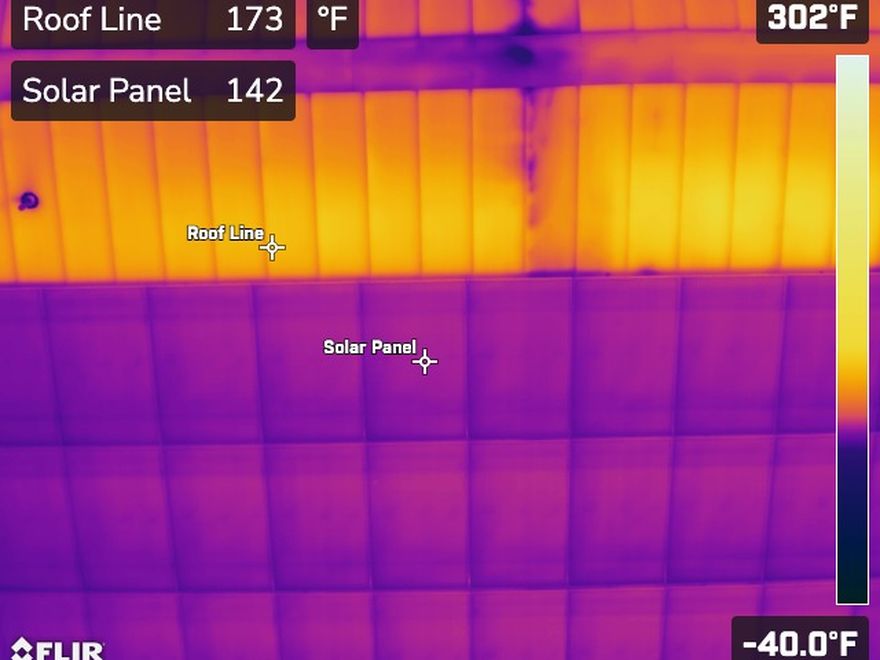
SPOT MEASUREMENT — ROOF LINE 173°F vs PANEL 142°F
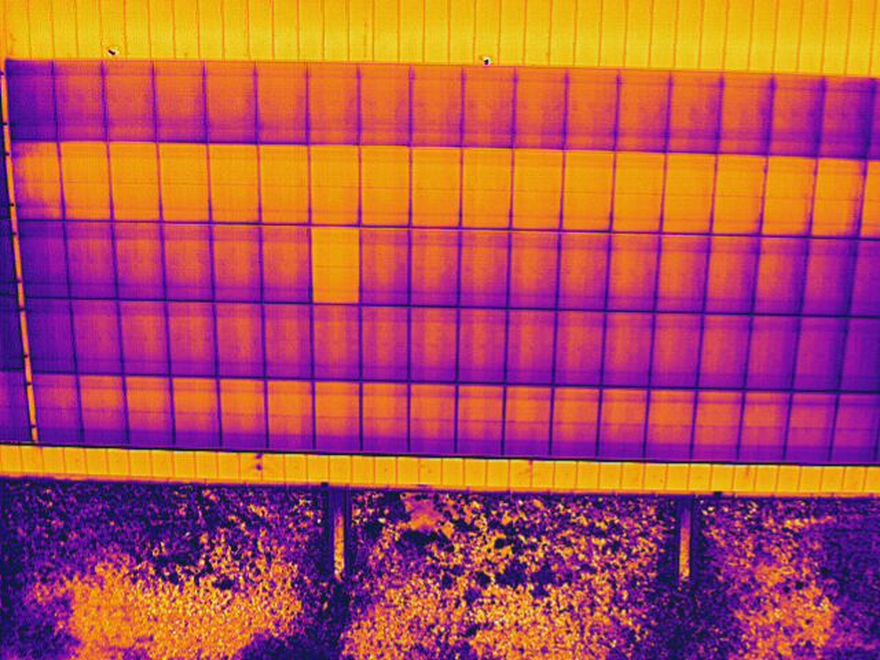
ROOF-MOUNTED ARRAY — PANEL-LEVEL THERMAL SURVEY
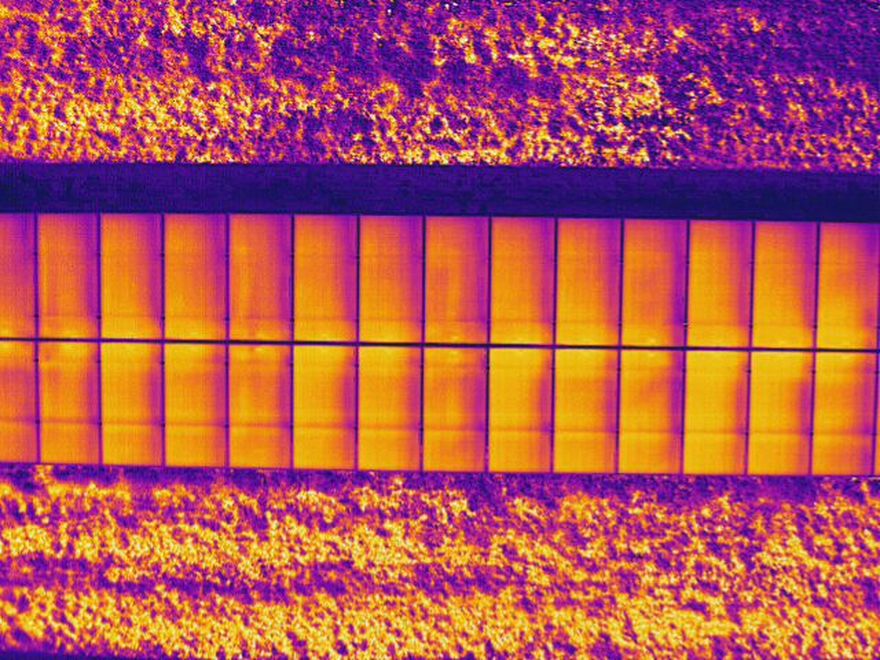
ARRAY ROW — UNIFORM THERMAL SIGNATURE
Temperature differentials across an array reveal underperforming panels, failed cells, and connection faults in a single flight — work that takes days to check panel by panel from the ground.
Send the location, what you need captured, and any deadline. You'll get a flat quote and the first available flight window.